
Hidden Areas Inspectors Check During Exit Cleaning
Hidden Areas Inspectors Check During Exit Cleaning
Moving out is thrilling until inspection day sneaks up on you for most renters. Many renters do a thorough job cleaning all the spaces they can see, but they leave behind some of the areas they can’t. Those neglected areas become among the most frustrating causes of unexpected bond deductions later on. Property managers usually turn out to be more thorough than renters expect, and are known to dig further in corners during final walk-throughs. The knowledge of these hidden places in advance will free your mind, and you will be surprised at how much better the results of the inspection will be.
1. Hidden Areas Matter Most
The majority of the landlords are aware that hidden dirt in these places would clearly show the way of cleaning throughout the employee’s entire tenancy. Dust behind the couch or dirt under the sinks often points to hurried cleaning before moving day sneakily shows up later on. An exit clean check will usually be more focused on areas that have been neglected and were not cleaned during regular household cleaning days. Meeting these expectations enables tenants to prepare appropriately, and they also have better odds of getting their bonds back in full after the fact.
2. Kitchen Appliances Need Attention
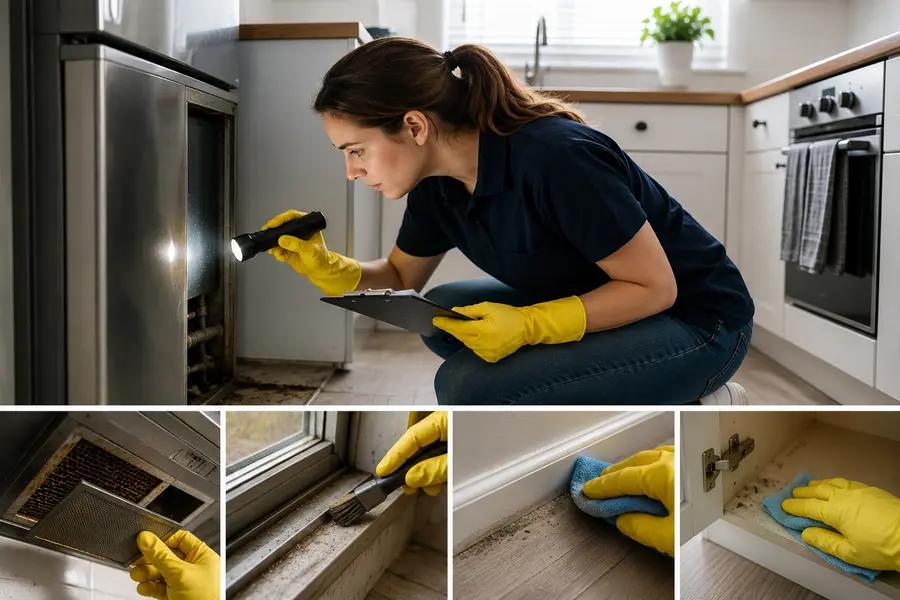
Inspectors often nudge small appliances forward as they look for grease accumulation hidden behind refrigerators, and microwaves are just as closely inspected. These tight spaces trap crumbs, food, dust, and maybe even sticky stains on your windows surprisingly fast over long tenancy periods in homes. Many tenants tend to shine all the visible kitchen surfaces beautifully, but completely neglect to clean the hard-to-reach, hidden spaces behind large appliances when they’re making moves. Knowing how to pass the move-out inspection starts with washing these neglected kitchen areas put you off to a good start in the official inspection appointments.
3. Exhaust Fans Collect Grease
Kitchen exhausts collect grease day in and day out silently and without becoming readily apparent under the surface while performing your regular inside busy homes cleaning routines. It’s common to see layers of grease in the filters of walls. Inspectors typically check the filters of range hoods due to tenants indicating that they have lived in the property long enough to show neglect in rental property management. Bathroom exhaust fans are also a prime location for dust accumulation, which can impede air flow and result in unpleasant odours inside small, enclosed rooms after use. A professional ventilation clean will make your presentation shine at any professional exit clean inspection performed meticulously by seasoned property managers thereafter.
4. Window Tracks Gather Dirt
Many tenants clean the glass of a window fine, but they completely neglect the tracks where thick grime and bugs silently accumulate through the ever-changing seasons. Afterwards, they typically slide the windows open and look closely at corners for dust accumulation or mould that may be hidden deep inside small crevices. Dusty tracks also immediately detract from the look of an otherwise immaculate unit in end-of-unit walkthroughs performed meticulously by landlords and managers regularly. To note, this is for anyone who really wants to learn to pass the exit inspection for keeps and not get into needless battles over cleaning at the end of the line. For deeper maintenance, professional residential fabric care can also help preserve overall cleanliness standards.
5. Skirting Boards Show Neglect
Skirting boards attract dust continuously because they remain close to floors, where dirt naturally settles every single day inside homes. Inspectors usually notice dark marks, cobwebs, and scratches along lower walls immediately during detailed property walkthroughs with tenants afterwards. Many renters vacuum carpets thoroughly but forget wiping skirting boards before important inspection appointments finally arrive unexpectedly later for property reviews. Clean room edges improve results greatly during every detailed exit cleaning inspection completed before handing property keys back officially.
6. Door Handles Need Cleaning
Fingerprints, grease, and smudges build up on frequently touched surfaces, but tenants don’t realise they’re accumulating throughout long periods inside after daily use. Door handles, light switches, and cupboard door knobs are also routinely checked by inspectors, as these small details are a very clear indication of overall cleaning effort, once fully. Cleaned switches. Dirty light switches can give the impression that freshly cleaned rooms are neglected, even if they have polished floors and dust-free furniture right there in the properties during inspections. Those researching how to pass the exit cleaning should always clean up high-touch surfaces thoroughly before the property managers show up later to officially.
7. Bathrooms Demand A Thorough Clean
Bathrooms can be made to look clean in a matter of minutes, but moisture hidden away out of sight secretes mould in inside corners, grout lines, and behind toilets. Learning how to clean your bathtub in 5 easy steps? can instantly improve the overall bathroom presentation before inspection day. Shower screens, taps, drains, and every edge of tiles are also inspected for soap scum or any other bathroom residues. Tiny mould areas around silicone edges frequently develop into serious cleaning issues during full property inspections undertaken regularly by veteran property managers. Intensive bathroom cleaning results in a big, notable difference in any professional end-of-tenancy cleaning inspection at the end of any rental term.
8. Cupboards Must Stay Spotless
Empty cabinets also need to be cleaned thoroughly because it is customary that inspectors will open all cabinets during final inspections prior to the full release of your bond. Crumbs, sticky spills, and dust inside drawers give off a bad impression, even if clean bedrooms or polished kitchen bench tops can be seen through the windows nearby. Many tenants hurriedly pack up their belongings and overlook glancing at the cupboards before the inspection day shows up, often later than expected, as they’re moving under stress. Anyone who wants to learn how to pass exit inspection should take a look at the storage areas before getting off the rental property for good.
9. Laundry Rooms Hide Dust
Laundry rooms, shelving corners, and nooks, and even around washing machines silently accumulate dust and dirt as the staff with the sprinkler or mop are attending to the bigger, more noticeable areas of the house. Often, as part of the inspection, the inspector will routinely check behind the washers and laundry sinks and around floor drains for layers of dust and/or grime that have accumulated and been hidden for months or years on end in the indoor environment. Some property managers may even make time to call back repeatedly and demand extra work from cleaners after inspection, when water marks are seen near tap surrounds and/or mottling on the side of the laundry sink. Correct laundry care enables successful finishes within each comprehensive exit clean inspection conducted prior to final tenant departure.
10. Outdoor Spaces Affect Inspections
Balconies, garages, patios, and entryways can often influence the results of an inspection, as the outdoor areas are considered a part of the total rental obligation well into the inspection process. Inspectors will sometimes spot-check for cobwebs along ceilings, weeds between walkways, and garbage at leisure spaces during later appointments on the property. Exterior unnoticed neglected corners resulting in negative first impressions, well before landlords even step foot inside beautifully cleaned interior rooms within their own rentals themselves afterwards. What You Need to Know to Pass the exit Inspection Clean Outdoors – Wash and scrub every outdoor area you’ve got at hand directly connected to the leased property, including any porches.
11. Ceiling Fans Collect Dust
Ceiling fans and air conditioners silently accumulate layers of dust, going largely unnoticed between regular cleanings during busy weeks indoors. Fan blades are often inspected by inspectors as the airborne dust the fan sends down is an immediate indicator of unfinished cleaning that can cause a critical issue during an important property inspection appointment, before or after, officially. Air conditioner vents also collect dirt that blocks the flow of fresh air and compromises the levels of indoor air cleanliness that landlords are expected to provide today. Adding these fixtures to the list in every exit cleaning inspection preparation significantly enhances the general property presentation for outgoing tenants immediately.
Final Checks Prevent Problems
Generally, good inspections are more based on a precise attention to detail, thorough work, and concentration than costly products and frantic cleaning jobs performed just before the big rush on moving day. Systematically working room by room, tenants can discover invisible imperfections that would have been missed in the frantic pre-move cleaning. Developing personal checklists also minimises missed items and enhances confidence when officials come for formal home assessments later down the line. Doing so will guide you if you’re on the path, trying to figure out how to pass exit inspection with flying colours while also ensuring that you walk away with your precious bond money intact at the end of it all.
Related Posts

Why Microfiber Towels Are a Must for Effective Cleaning?
Have you ever wondered why some individuals can clean their houses with a flick of…
Ten Mysterious Areas People Rarely Clean at Home
Have you ever taken time to look back and see how much time you spend…
Cleaning Solar Battery Cupboards and Powerwalls Before Handover
Solar Battery Cupboards Cleaning Before Property Handover Solar battery systems are becoming more and more…